From photograph to next step, in minutes.
BiliSG© estimates a baby's bilirubin level from photographs of the skin. It is a screening tool: it tells you whether a confirmatory blood test is needed, and it does not replace one.
Step by step
-
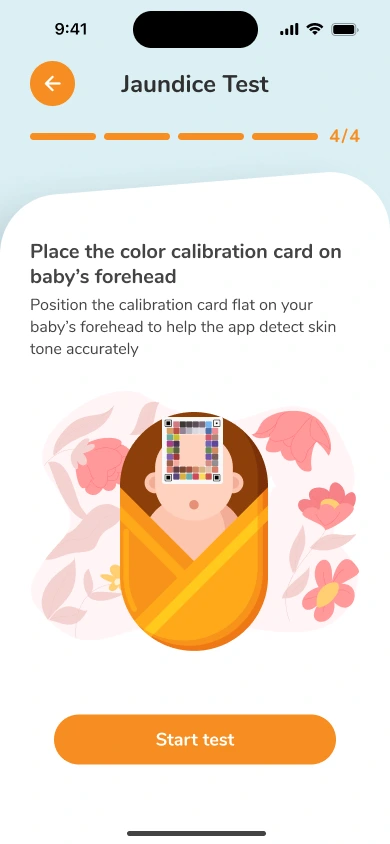 1 Step 1 of 5
Place the colour sticker.
A small colour calibration sticker is placed on the baby's skin. It lets the app correct for differences in lighting and phone cameras.
-
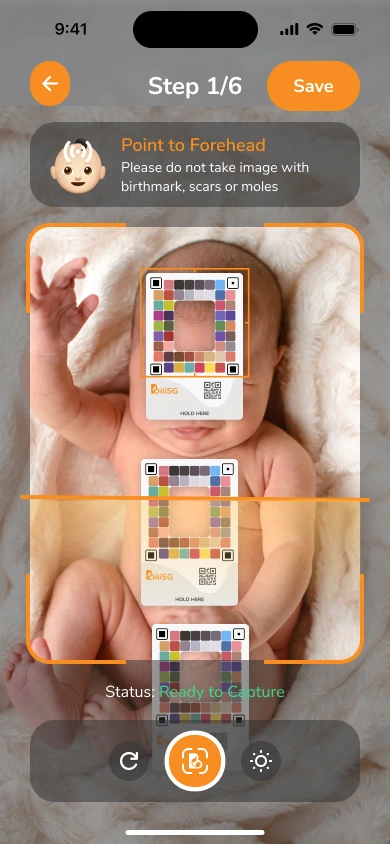 2 Step 2 of 5
Take guided photographs.
The app guides the user to photograph three areas: the forehead, the chest and the tummy.
-
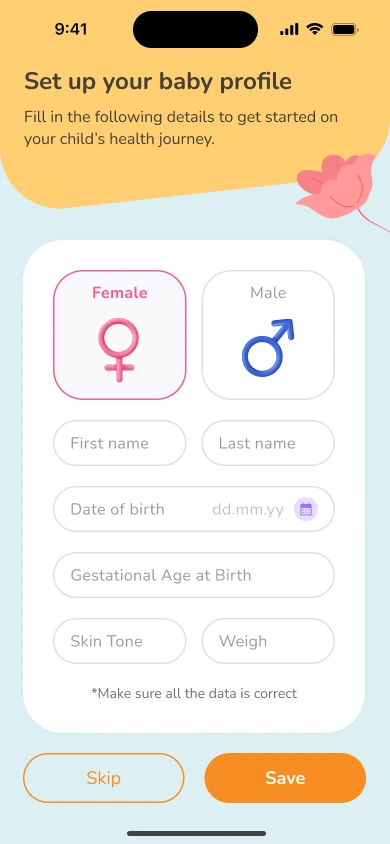 3 Step 3 of 5
Enter a few details.
The baby's age in hours and birth weight help the app interpret the reading.
-
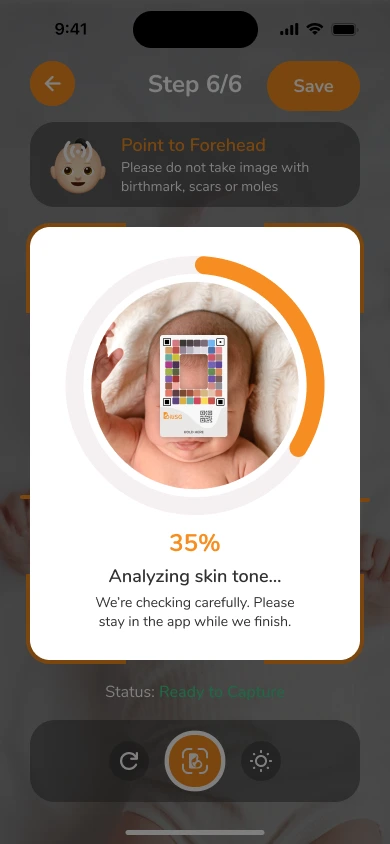 4 Step 4 of 5
The app analyses the images.
A machine learning model measures the yellowness of the skin in each area and estimates the bilirubin level.
-
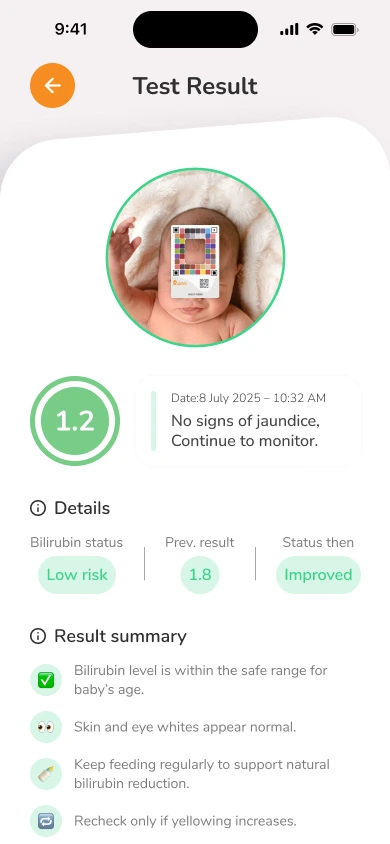 5 Step 5 of 5
Receive a clear next step.
A low reading means routine follow-up. A higher reading means the baby should have a confirmatory blood test.
Low reading Routine follow-up Higher reading Confirmatory blood test
Clinical knowledge, combined with machine learning.
Doctors have long known that jaundice appears first on the face and moves down the body as bilirubin rises. BiliSG© builds on this by reading skin colour from three body areas instead of one.
The colour calibration sticker sits flat on the skin, which removes shadows and keeps colours consistent from one photograph to the next. The model was trained and tested on newborns from Singapore's Chinese, Malay, Indian and other communities.
Built with safety in mind
-
Cautious thresholds
The app is set to refer a baby for a blood test well before the level at which treatment is usually needed.
-
Blood test remains the standard
Treatment decisions are always based on the serum bilirubin blood test and clinical assessment.
-
Clinician oversight
BiliSG© is used within care pathways led by doctors and nurses.
-
Privacy
Photographs are used only for the screening and approved research, and are handled under Singapore's personal data protection requirements.
NNJ@Home
BiliSG© is the centrepiece of NNJ@Home, a pilot programme supported by the Ministry of Health. The pilot is studying whether parents can screen their baby at home with BiliSG©, supported by teleconsultation with a doctor or nurse, so that clinic visits are kept for babies who need a blood test.